

Whole Home Standby Generators — Built for South Carolina Life.
Don't Wait for the Next Storm. Serving Florence, Darlington, Marion & Beyond.
South Carolina is one of the most storm-prone states in the nation. From hurricane season along the coast to severe thunderstorms, ice storms, and inland flooding across the Midlands and Upstate, power outages here aren't a rare inconvenience — they're a way of life. The question isn't if the power will go out. How long, and how prepared, will you be?
A whole home standby generator is the most effective way to protect your family, your property, and your peace of mind, no matter what the weather brings.
Located in Florence, SC, Quality Service Company is proud to install quality whole-home generators from Generac and Cummins throughout the Pee Dee area. Get in touch with us today to learn more about these systems.
South Carolina's Power Reality
During Hurricane Helene in September 2024, South Carolina recorded the longest average outage duration in the entire nation — 53 hours — while some communities went without power for two weeks or more. Over 4.79 million customers across the Southeast lost power in a single event.
That's not just a statistic. Those are days without air conditioning in the heat, spoiled food, no medical equipment, and families evacuating to hotels, all while wondering when life will return to normal.
South Carolina homeowners face this reality from multiple directions:
- Hurricane season (June–November) threatens the entire state, from Myrtle Beach to Columbia to the Upstate
- Severe summer thunderstorms capable of downing power lines in minutes
- Winter ice storms that can knock out power for days and freeze pipes overnight
- Aging grid infrastructure — outages caused by equipment failures, not just weather
- Wildlife and vehicle accidents — animals, tree limbs, and car strikes on utility poles are among the most common causes of outages year-round
The average South Carolina homeowner loses power for more than 5 hours per year, and that's just the average. Major storm events have left hundreds of thousands of residents in the dark at once.
What Is a Whole Home Standby Generator?
A whole home standby generator is a permanently installed backup power system connected directly to your home's electrical panel and natural gas or propane supply. The moment utility power fails, an
The Automatic Transfer Switch (ATS) detects the outage and activates the generator within seconds.
You don't flip a switch. You don't run an extension cord. You don't even have to be home. Power is simply restored — quietly and automatically — and your life goes on.
When utility power returns, the system seamlessly transfers back on.
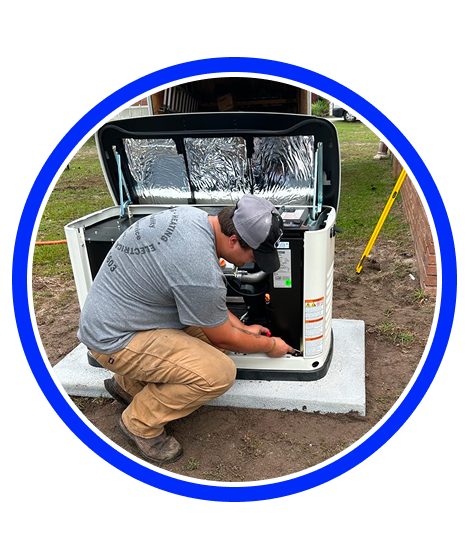
For most homes in Florence and the Pee Dee, the generator is installed outside on a concrete pad, much like an air conditioning unit, and sized to match your electrical load so that essential systems come back online together rather than in stages. Because the ATS is tied to your main panel, circuits are selected and balanced during design, so you are not left guessing about what will stay on when the power fails.
When we provide generator service in Florence, we also review local code requirements, placement clearances, and fuel availability to ensure the system is not only convenient but also compliant and safe for your family and neighbors. This upfront planning helps the generator integrate cleanly with your existing HVAC and electrical equipment and reduces the risk of nuisance shutdowns during an actual outage.
10 Reasons South Carolina Homeowners Invest in Standby Generators
1. Hurricane & Storm Preparedness
South Carolina sits squarely in the path of Atlantic hurricanes and tropical storms. Whether you're on the coast in Hilton Head or Myrtle Beach, or inland in Florence, Columbia, or Greenville, a major storm can leave your neighborhood without power for days. A whole home generator means your family stays safe, cool, and comfortable — no matter how long the grid takes to recover.
2. Protection from Winter Ice Storms
South Carolina winters can bring sudden ice storms and freezing temperatures that snap power lines and freeze pipes overnight. Without heat, an unprotected home can sustain thousands of dollars in plumbing damage in a single night. A standby generator keeps your heating system running and your pipes from freezing — even when you're away.
3. Keeping Your AC Running in the Heat
South Carolina summers are brutal. Heat index temperatures routinely exceed 100°F, making a working air conditioner more than a comfort — it is a health necessity, especially for children, the elderly, and anyone with respiratory conditions. A whole-home generator helps ensure your HVAC system does not stop during summer storm outages.
4. Life-Saving Power for Medical Equipment
Many households depend on electricity for critical medical needs — oxygen concentrators, CPAP machines, electric hospital beds, insulin refrigeration, and home dialysis equipment. A power outage is not just an inconvenience for these families; it can be a life-threatening emergency. A standby generator provides continuous, reliable power when it matters most.
5. No More Spoiled Food
A full refrigerator and freezer can hold hundreds of dollars' worth of groceries. A few hours without power during a South Carolina summer is enough to spoil everything. A whole-home generator keeps refrigerators and freezers running during any outage — protecting your food supply and helping you avoid unnecessary replacement costs.
6. Protecting Your Work-from-Home Life
More South Carolinians than ever work from home. A power outage means no internet, no VPN, no video calls, and missed deadlines — potentially costing you clients, income, and your professional reputation. A standby generator keeps your home office fully operational, every day of the year.
7. Home Security That Never Goes Dark
Power outages disable alarm systems, security cameras, smart locks, and motion lighting — leaving your home vulnerable precisely when your neighborhood may be most at risk. A whole-home generator keeps every layer of your home security active and working during any outage.
8. Protecting Your Investment & Home Value
A whole-home standby generator is one of the highest-return home improvements you can make. Homes with permanently installed generators are more attractive to buyers — particularly in storm-prone coastal and inland South Carolina markets. Installing a generator can boost your home's resale value and may even qualify you for a discount on your homeowner's insurance premium.
9. Protection Against Power Surges
When utility power is restored after an outage, it often comes back with a surge — a sudden spike in voltage that can damage or destroy electronics, appliances, and HVAC equipment. A standby generator with automatic transfer technology acts as a buffer, helping to protect your home's sensitive systems from dangerous fluctuations.
10. Absolute Peace of Mind — Day or Night
Whether you're at work, on vacation, asleep at 2 AM, or riding out a storm, a standby generator works automatically, without any action required from you. For families with young children, elderly relatives, or anyone who depends on stable conditions at home, that peace of mind is invaluable.
Standby vs. Portable — Why It Matters in South Carolina
Many homeowners consider portable generators as a less expensive alternative.
Here is the honest comparison:
| Feature | Whole Home Standby | Portable Generator |
|---|---|---|
| Activation | Automatic — seconds after outage | Manual — must set up during storm |
| Power coverage | Entire home | Limited — a few appliances |
| Fuel supply | Connected to gas line — never runs out | Requires stored gasoline or propane |
| Safety | Installed outside, no CO risk | Carbon monoxide risk if misused |
| Storm readiness | Always ready | Must be retrieved and set up |
| Long-term cost | Higher upfront, lower total cost | Lower upfront, ongoing fuel and storage costs |
| Home value | Increases resale value | No impact on value |
Because whole-home systems are hardwired into your main panel, they also avoid the risk of backfeeding power into utility lines, which can endanger line workers during restoration. Portable units must be carefully connected through transfer equipment or individual cords, and many homeowners in Florence have said they simply do not want to be outside in wind and rain trying to refuel and reposition a small generator. When we discuss options with you, we review how often you lose power, what you need to keep running, and whether a permanently installed unit or a smaller backup solution makes the most sense for your property and budget.
Is It Worth the Investment?
Consider what a single major outage actually costs without a generator:
- Spoiled refrigerator and freezer contents: $300–$800
- Hotel stay for the family during extended outage: $150–$300 per night
- Restaurant meals during outage: $50–$150 per day
- Frozen or burst pipe repair: $1,000–$15,000
- Damaged electronics from a power surge: $500–$5,000+
- Lost work income (remote workers): Varies
- Emergency generator rental: $200–$500+
A single major storm event can easily cost an unprotected household more than the price of a standby generator installation. Unlike a hotel stay or repair bill, a generator is there for every storm, every outage, every year — for decades.
What to Expect from Professional Installation
A properly installed whole home generator includes:
- In-home power assessment — determining the right generator size for your home's load
- Site preparation — concrete pad, proper clearances, and local code compliance
- Electrical connection — automatic transfer switch installation at your main panel
- Gas or propane line connection — coordinated with your utility or LP supplier
- Permit pulling and inspections — handled by your licensed installer
- System startup and testing — simulated outage to verify seamless switchover
- Homeowner walkthrough — so you understand your system and maintenance needs
Always use a licensed, certified electrician for generator installation. Improper installation can back-feed the utility grid, damage equipment, and create serious safety hazards.
For most homes in Florence and the Pee Dee, the installation process starts with a visit to review your electrical panel, HVAC equipment, and any medical or business needs that must remain powered. From there, we help you choose between Generac and Cummins options, explain where the unit will sit outside, and outline how long each step typically takes, from permits with the local jurisdiction to the final inspection. By coordinating the electrical and fuel work under one roof, we reduce the number of separate contractors you have to manage.
During and after the install, we keep you informed about any brief planned outages while wiring is completed, so you can plan around work, school, or caregiving schedules. Once the generator is running, we review basic maintenance tasks and recommended service intervals and explain how to contact us if you ever notice alerts on the control panel. Our goal is for you to think of as the generator service Florence homeowners can rely on, and to feel confident calling us because you know exactly what to expect.
Don't Wait Until the Next Hurricane Warning.
Generator installers get booked out quickly as storm seasons approach. The time to act is before you need it — not during a storm watch when your neighbors are all calling at once.
Contact Quality Service Company today for a free in-home power assessment and let our licensed team find the right whole-home generator solution for your South Carolina property.
Schedule a free assessment, get a quote, and learn about financing options when you call (843) 920-2004.
Have Questions?
-
Yes! Whole home generators have an automatic transfer switch (ATS) that detects power loss and starts the generator within seconds, providing seamless backup power.
-
The cost varies based on the generator’s size, fuel type, and installation complexity. Contact us for a customized estimate and learn about flexible financing options.
-
Yes! A properly sized generator can run your heating, cooling, appliances, and essential electronics to keep your home comfortable during an outage.
-
Regular maintenance is recommended once a year or every 200 hours of operation. This includes oil changes, battery checks, and performance tests. We offer generator maintenance plans for hassle-free upkeep.
-
The right size depends on the number of appliances and systems you want to power during an outage. We offer free consultations to assess your power needs and recommend the best generator for your home.
-
When the power goes out, the generator detects the outage and starts within seconds, supplying electricity to your home. Once utility power is restored, it automatically shuts down and returns to standby mode
Very Friendly and Professional