
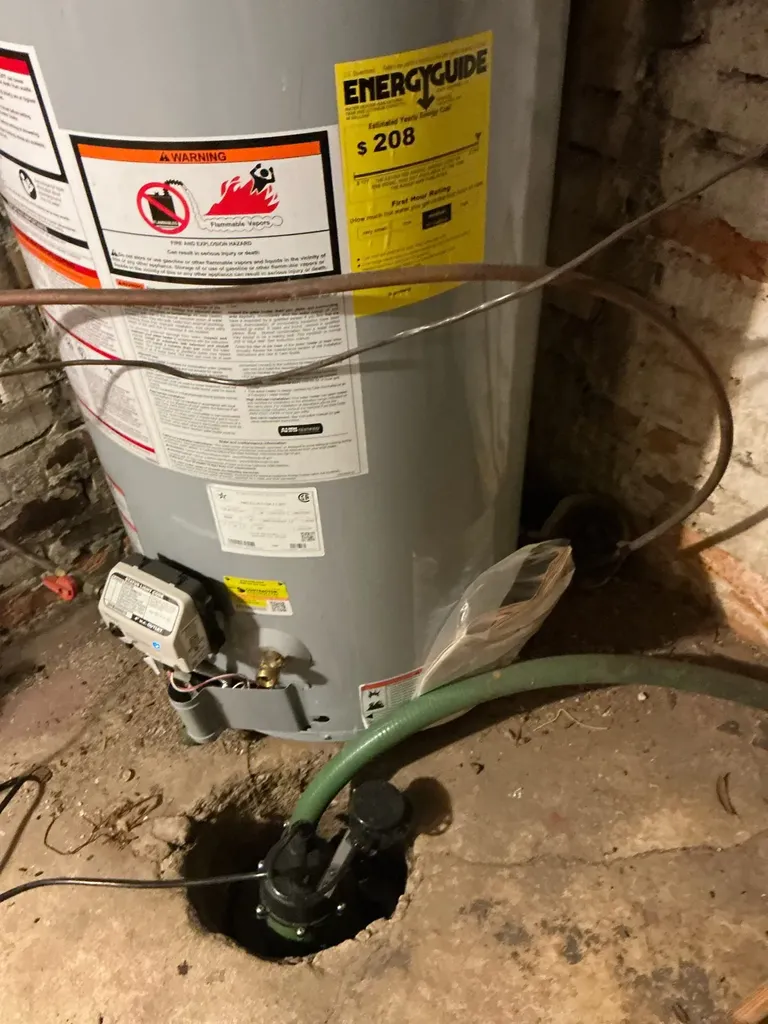
A sump pump moves water away from your home before it can build up. In Florence County, the soil holds water close to the surface for much of the year. That makes a working pump worth understanding, even in a home with no basement. This guide from Quality Service Company, LLC explains how a pump works, what a backup adds and what to check.
Why does Florence ground hold so much water?
USDA soil survey data for Florence County shows that 58.5% of mapped acres have a seasonal water table within one foot of the surface at some point in the year. About 38% of the acres are poorly or very poorly drained.
The same measure is 62% in Marion County and 52% in Dillon County. In Darlington County it is 31%. The county’s most common soil, Lynchburg sandy loam, has a water table 6 to 18 inches down from November through April.
These are soil ratings across whole counties, not a reading at your address. They explain why yards stay soggy and low rooms stay damp.
Does my Florence home need a sump pump?
We did not find a count of Florence homes with basements or sump pumps. Across the South Atlantic states, most new homes are built on slabs. In 2024, 85.7% were.
A pump can matter in a crawlspace, on a low lot, or in a room below the surrounding ground. If water has stood there before, tell your tech.
Call (843) 252-0360 or book online.
What does a sump pump do?
- It sits in a pit and collects water that seeps in around the foundation.
- A float switch turns the pump on when the water rises.
- The pump pushes the water out through a discharge pipe, away from the house.
- A check valve keeps the water from running back into the pit.
Why does a backup matter in a storm?
The storms that fill a pit often knock out power. A pump with no power does nothing.
The Lynches River at Effingham reached 19.70 feet on October 6, 2015, the third highest on record there. The Pee Dee River at Peedee reached 31.83 feet on September 21, 2018, the second highest since 1939. The Little Pee Dee River runs through Dillon and Marion counties. At Galivants Ferry it set its record that same day, at 17.21 feet.
Marion County knows this well. The state’s flood mitigation buyout program lists 23 properties in Nichols and 19 in Mullins. Dillon County has 6.
We install backups and alarms:
- A standby battery that runs the pump while the power is out.
- A water-powered backup pump that needs no electricity at all.
- A sump pump alarm that tells you when the water is rising.
What is a sewage ejector pump?
It lifts wastewater from a low bathroom or basement up to the main line. When it fails, the toilets, sinks or tub below it can back up.
Signs of trouble include a pump that runs constantly, a gurgle from the fixtures, or a smell from the pump chamber. We inspect ejector pumps and replace the pump or the float.
What can I check myself?
- Pour a bucket of water into the pit. The float should rise and the pump should start.
- Watch the discharge pipe outside. Water should leave and stay away from the foundation.
- Listen for grinding, rattling or a pump that never shuts off.
- Test the alarm and the battery, if you have them.
If the pump does not start, do not wait for the next storm. Call us.
We install and replace sump pumps, add backups and alarms, and inspect and replace sewage ejector pumps. Read about our sump, sewage ejector and well pump service.
We have 24/7 dispatch for plumbing. Call (843) 252-0360 or book online.
Common questions
What is the difference between a battery backup and a water-powered backup?
A battery backup runs the pump for a limited time when the power is out. A water-powered backup runs on water pressure from your supply, so it has no battery to run down. Your tech can explain which fits your pit.
Can I add a backup to a pump I already have?
We install a standby battery or a water-powered backup pump. Your tech will look at your pit and the discharge line first.
Where do the numbers in this guide come from?
They come from public sources, listed below. Soil figures describe whole counties. River figures are USGS annual peaks.
Sources
- USDA NRCS Soil Data Access, Florence, Darlington, Dillon and Marion counties, queried September 2026
- USDA Lynchburg soil series description
- USGS peak streamflow, Pee Dee River at Peedee; sites 02132000 (Lynches River at Effingham) and 02135000 (Little Pee Dee River at Galivants Ferry)
- SC Office of Resilience, CDBG-Mitigation buyout program
- NAHB, foundation types in 2024, from the Census Survey of Construction
- SC Emergency Management Division, floods